

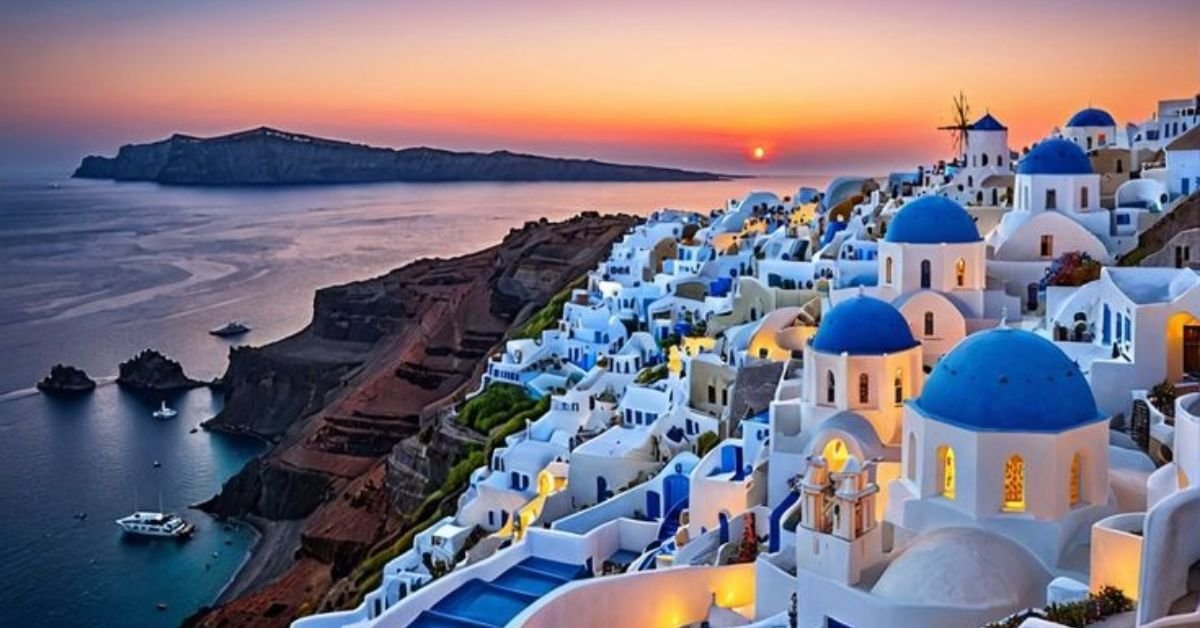
Imagine standing above the deep blue waters of the Aegean Sea, watching whitewashed houses follow the curve of a volcanic cliff. Blue-domed churches rise between narrow pathways, small restaurants glow in the afternoon sunshine, and traditional fishing boats move slowly across the water below. Santorini Greece Island
This is Santorini, Greece, one of the most recognizable island destinations in the world.
Whether you’re planning a romantic escape, exploring ancient Greek history, photographing beautiful coastal villages, or simply looking for a peaceful Mediterranean holiday, the Santorini Greece Island experience offers something memorable. From the famous sunset views of Oia to the black-sand beaches of Perissa and the ancient settlement of Akrotiri, the island combines natural beauty, culture, adventure, and relaxation.
However, Santorini is more than its famous photographs. Its volcanic landscape, traditional villages, local wineries, archaeological treasures, and quieter inland communities make it a destination worth exploring beyond the usual tourist stops. Santorini Greece Island
In this travel guide, we’ll explore the best things to do in Santorini, Greece, including its major attractions, transportation options, estimated travel costs, nearby island comparisons, and practical advice for planning a trip in 2026.
Santorini Greece Island: Quick Travel Overview
| Travel Information | Details |
|---|---|
| Location | Cyclades Islands, Aegean Sea, Greece |
| Main Town | Fira |
| Famous Village | Oia |
| Currency | Euro (€) |
| Language | Greek; English is widely understood in tourist areas |
| Main Airport | Santorini International Airport (JTR) |
| Main Ferry Port | Athinios Port |
| Best Time to Visit | May–June and September–October |
| Main Attractions | Oia, Fira, Akrotiri, Red Beach, Perissa |
| Archaeological Site Fee | Akrotiri: €20 adult admission |
| Public Bus Fare | Approximately €2.20–€2.80 per journey |
| Ideal Duration | 3–4 days |
| Best Way to Explore | Public buses, walking, and a rental car |
Prices and travel information are based on available 2026 information. Transport fares, attraction schedules, and seasonal services can change, so check official sources before departure
Where Is Santorini, Greece?

Aerial view of Santorini Island, Greece.
Santorini is located in the southern part of the Cyclades island group, in the Aegean Sea. It belongs to Greece and sits southeast of mainland Greece, surrounded by smaller volcanic islands.
The island is also historically known as Thera. Its unusual crescent shape was formed through major volcanic activity, including an enormous eruption during the Bronze Age that dramatically changed the landscape.
Today, visitors recognize Santorini for its dramatic caldera, whitewashed architecture, blue-domed churches, volcanic beaches, and spectacular sea views.
The island is made up of several settlements, each offering a different experience:
Fira
The lively capital, known for restaurants, shopping, nightlife, and beautiful caldera views.
Oia
The famous village associated with romantic sunsets, whitewashed houses, and picturesque architecture.
Imerovigli
A quieter cliffside settlement offering beautiful panoramic scenery and peaceful surroundings.
Pyrgos
A traditional village featuring historic buildings, narrow streets, and elevated island views.
Akrotiri
An important archaeological area with fascinating prehistoric history and ancient ruins.
Kamari and Perissa
Popular coastal destinations known for their distinctive dark volcanic sand beaches.
Best Things to Do on Santorini Greece Island
Santorini offers more than beautiful accommodation and sunset restaurants. Its attractions include historic settlements, archaeological sites, coastal landscapes, and opportunities to experience traditional Greek island life.
Here are the places worth including in your itinerary.
1. Explore the Beautiful Village of Oia

The beautiful whitewashed village of Oia, Santorini, Greece.
Oia is arguably the most famous village on Santorini. Its white buildings, narrow pathways, blue-domed churches, and traditional cave houses create the postcard scenery that attracts travelers from around the world.
Walking through Oia is an experience in itself. Small boutiques, art galleries, cafés, and restaurants line its narrow streets. Many viewpoints overlook the caldera, offering beautiful views of the volcanic islands and deep blue sea.
Things to Enjoy in Oia
- Explore the traditional village streets.
- Photograph the famous blue-domed churches from public viewpoints.
- Visit the remains of Oia Castle.
- Browse local art galleries and small shops.
- Enjoy a meal overlooking the caldera.
- Watch the sunset from a suitable public viewpoint.
Oia becomes particularly crowded around sunset, especially between June and August. If you prefer quieter streets and better opportunities for photography, visit early in the morning.
2. Discover Fira, the Capital of Santorini

Panoramic views of Fira, the beautiful capital of Santorini.
Fira is the island’s main town and one of the most convenient places to experience Santorini.
Built along the edge of the volcanic caldera, the town offers remarkable views across the water. Its streets are filled with restaurants, cafés, souvenir shops, small museums, and hotels.
Fira is also an excellent starting point for travelers who want to explore the island using public transportation.
Things to Enjoy in Fira
- Walk along the beautiful caldera promenade.
- Visit the Museum of Prehistoric Thera.
- Explore the Archaeological Museum of Thera.
- Enjoy traditional Greek food at a local restaurant.
- Photograph the dramatic cliffside architecture.
- Take the cable car between Fira and the Old Port, subject to operating conditions.
For a more peaceful experience, explore the streets away from the busiest shopping areas. You can discover smaller cafés, traditional architecture, and beautiful viewpoints without the busiest tourist crowds.
Fira is also a good place to stay if you want easy access to restaurants, transportation, and different island attractions.
Visit the Ancient Archaeological Site of Akrotiri
If you’re interested in history, Akrotiri is one of the most fascinating places on Santorini.
This prehistoric settlement was buried following a major volcanic eruption during the Bronze Age. The volcanic material helped preserve important remains of the ancient town, including buildings, streets, and objects connected to everyday life.
Today, visitors can walk along elevated pathways inside a protective structure and observe the remains of this ancient settlement.
Akrotiri provides a valuable look into the development of early Aegean civilization.
Useful visitor information:
- Adult admission: €20.
- Reduced admission: €10.
- Winter opening hours: Generally 8:30 AM–3:30 PM, Wednesday through Monday.
- Winter closure: Tuesday.
- Summer schedules vary by date and weekday.
Allow approximately 1–2 hours to explore the site. Consider combining your visit with the Museum of Prehistoric Thera in Fira.
4. Relax at Red Beach
Red Beach is one of Santorini’s most distinctive coastal landscapes.
Its reddish volcanic cliffs create a striking contrast against the blue sea, making it particularly interesting for photography.
The surrounding landscape looks very different from the white villages along the caldera. Instead of traditional architecture, visitors encounter dramatic volcanic rock formations and a rugged coastline.
You can enjoy the surrounding scenery and explore the area from appropriate viewpoints.
Important safety information: The access path and beach area have experienced rockfall hazards and restrictions. Do not cross closure barriers or attempt to reach the beach through unsafe cliff paths. Check current local access conditions before planning a visit. Boat excursions may provide an alternative when available.
5. Enjoy the Black-Sand Beaches of Perissa
Perissa is one of the island’s best-known beach destinations.
Unlike the traditional white architecture of Oia and Fira, this coastal settlement is famous for its dark volcanic sand and impressive views of Mesa Vouno mountain.
The beach has a relaxed atmosphere, with restaurants, cafés, beach facilities, and places to enjoy the water.
Popular activities include:
- Swimming in the Aegean Sea when conditions are suitable.
- Relaxing on the volcanic sand.
- Enjoying seafood at a beachfront restaurant.
- Trying water activities offered by local operators.
- Taking photographs of the coastline and surrounding mountains.
Remember that dark volcanic sand can become extremely hot during summer afternoons. Water shoes and suitable footwear can make walking more comfortable.
6. Explore the Traditional Village of Pyrgos
Pyrgos offers a different atmosphere from the busy streets of Oia and Fira.
Located on elevated ground, this traditional village is known for its narrow pathways, historic architecture, churches, and views across the island.
Its old fortified settlement, known as a kasteli, reflects the island’s historical need to protect communities from attacks.
Walking through Pyrgos feels like discovering a quieter side of Santorini. You can explore small cafés, traditional houses, and scenic viewpoints without following the same crowded tourist route.
It is particularly attractive for travelers who enjoy architecture, photography, and discovering local communities.
7. Experience a Santorini Volcano and Caldera Boat Tour
Santorini’s volcanic history is one of its most important characteristics.
A boat excursion around the caldera provides an opportunity to see the volcanic landscape from the water.
Many organized excursions include visits to Nea Kameni, the volcanic island located inside the caldera. Depending on the operator and conditions, tours may also include stops around Palea Kameni and nearby coastal areas.
Typical experiences include:
- Boat sightseeing around the caldera.
- Walking on volcanic terrain.
- Learning about the island’s geological history.
- Enjoying panoramic views of Fira and Oia from the sea.
- Swimming stops when conditions and tour arrangements allow.
Some excursions last several hours, while sunset catamaran cruises may include meals and swimming opportunities.
Compare tour itineraries carefully because not every package includes the same stops.
8. Visit Ancient Thera
Ancient Thera sits on the mountain ridge between Kamari and Perissa.
This archaeological site contains remains from different historical periods, including ancient streets, religious structures, public buildings, and other ruins.
Its elevated position is one of its biggest attractions. Visitors can enjoy impressive views across the island while exploring the remains of an ancient settlement.
Adult admission is €10, with reduced admission at €5 according to the official 2026 information.
Opening hours are seasonal, and the site can have limited winter access. Check the official schedule before making the journey.
Regional Comparison: Santorini vs Other Greek Islands
Santorini is not the only beautiful island in Greece. The Cyclades and surrounding regions offer several destinations with different landscapes, beaches, prices, and experiences.
If you’re deciding where to spend your Greek holiday, the following comparison can help.
| Destination | Best Known For | Ideal Travelers |
|---|---|---|
| Santorini | Caldera views, sunsets, volcanic landscapes | Couples, photographers, first-time visitors |
| Mykonos | Beach clubs, nightlife, stylish villages | Friends, nightlife lovers |
| Naxos | Long sandy beaches, mountain villages, local culture | Families, adventure seekers |
| Paros | Beaches, traditional villages, dining | Couples, independent travelers |
Santorini vs Mykonos
Mykonos is famous for its lively nightlife, beach clubs, beautiful beaches, and stylish atmosphere.
Santorini, on the other hand, is more closely associated with romantic scenery, dramatic volcanic cliffs, sunsets, and archaeological history.
Choose Santorini if you prefer scenic viewpoints, historic sites, and romantic experiences. Choose Mykonos if nightlife and beach entertainment are higher priorities.
Santorini vs Naxos
Paros combines attractive beaches, traditional villages, waterfront restaurants, and a lively but generally relaxed atmosphere.
It can be a good choice for visitors looking for a balance between beach holidays and cultural exploration.
Santorini is more distinctive for its volcanic landscape and cliffside villages, while Paros offers a broader range of conventional beach experiences.
My recommendation: If you have enough time, combine Santorini with Naxos or Paros. You can enjoy the dramatic caldera scenery first and then spend a few days relaxing on sandy beaches.
How to Get to Santorini, Greece
Santorini is accessible by air and ferry, making it relatively easy to include in a wider Greek holiday.
1. Traveling by Air
The island’s main airport is Santorini International Airport (JTR), located near the eastern side of the island.
The most convenient route for international travelers is often to fly into Athens first and connect to Santorini.
Approximate flight times:
- Athens to Santorini: 45–50 minutes.
- Thessaloniki to Santorini: Approximately 1 hour 30 minutes.
Airlines and seasonal connections vary throughout the year, so compare flight schedules before booking.
From the airport, you can reach Fira using:
- Public bus: Approximately €2.20.
- Taxi: Prices vary; confirm the fare before departure.
- Private transfer: Convenient for groups and travelers carrying large luggage.
The airport-to-Fira bus journey takes approximately 15 minutes, depending on traffic.
Traveling by Ferry
Traveling by ferry is another popular way to reach Santorini.
Most conventional ferries depart from Piraeus Port in Athens, although other Greek islands also have connections.
Typical journey estimates:
| Route | Approximate Journey |
|---|---|
| Athens (Piraeus) to Santorini | 5–8 hours |
| Crete to Santorini | Around 2–6 hours, depending on service |
| Mykonos to Santorini | Around 2–3 hours on faster services |
| Naxos to Santorini | Around 1.5–3 hours, depending on ferry |
These are planning estimates, not guaranteed schedules. Ferry types, routes, weather, and seasonal timetables affect journey times.
You can compare available connections through Ferryhopper or check the official Greek National Tourism Organisation website.
Travel advice: During July and August, reserve ferry tickets early. If you’re flying internationally from Athens after your island stay, avoid booking a tight same-day ferry connection before your flight.
Getting Around Santorini: Transport Options and Costs
Getting around Santorini is relatively straightforward, but your experience depends on where you’re staying and which attractions you want to visit. The island offers several transportation options, from affordable public buses to rental cars and taxis. Choosing the right option can make exploring its villages, beaches, and scenic viewpoints much easier.

Public Buses
Public buses are one of the most affordable transportation options in Santorini. They are especially useful for travelers who want to explore the island without renting a car.
Most major bus routes connect through Fira, including services to Oia, Kamari, Perissa, Akrotiri, and the airport. This makes Fira an important transport hub for visitors staying in different parts of the island.
Approximate 2026 One-Way Bus Fares
Here is a quick look at the approximate bus fares for some popular routes around Santorini:
| Bus Route | Approximate Fare |
|---|---|
| Fira to Oia | €2.20 |
| Fira to Kamari | €2.20 |
| Fira to Akrotiri | €2.20 |
| Fira to Perissa | €2.70 |
| Fira to Athinios Port | €2.70 |
Getting Around Santorini: Transport Options and Costs
Getting around Santorini is relatively straightforward, but your experience depends on where you’re staying and which attractions you want to visit.
Public Buses
Public buses are one of the most affordable transportation options.
Most major routes connect through Fira, including services to Oia, Kamari, Perissa, Akrotiri, and the airport.
Approximate 2026 one-way fares:
- Fira to Oia: €2.20.
- Fira to Kamari: €2.20.
- Fira to Akrotiri: €2.20.
- Fira to Perissa: €2.70.
- Fira to Athinios Port: €2.70.
Check the official Santorini KTEL fare list for updated fares and routes. Santorini Tourism Guide+1
Rental Cars
Renting a car provides more flexibility, particularly if you want to explore Pyrgos, Emporio, wineries, and beaches at your own pace.
Advantages include:
- Freedom to explore less-visited villages.
- Convenient transportation for families.
- Easier access to southern island attractions.
- Flexibility when visiting multiple places in one day.
However, some roads are narrow, parking can be difficult, and summer traffic around popular villages can be heavy.
Check rental conditions, insurance coverage, parking arrangements, and driving-license requirements before booking.
Taxis and Private Transfers
Taxis are convenient when traveling with luggage or heading somewhere that is not easily accessible by bus.
However, Santorini has a limited taxi supply, especially during busy periods.
Pre-booked transfers are worth considering when arriving late at night, traveling with a group, or staying outside the main towns.
Driving vs Organized Tours: Which Is Better?
| Option | Advantages | Disadvantages |
|---|---|---|
| Public Bus | Affordable and useful for major routes | Waiting and changing buses |
| Rental Car | Flexible independent exploration | Parking and traffic |
| Taxi | Convenient and direct | Limited availability |
| Guided Tour | Organized sightseeing and local information | Fixed schedule |
| Private Transfer | Comfortable and convenient | Higher cost |
My suggestion: Use public buses for Fira, Oia, and the popular beach towns. Rent a car for a day if you want to explore the island’s inland villages and southern attractions.
Estimated Santorini Travel Budget for 2026
Santorini is generally considered an expensive Greek island, especially in summer and in accommodation overlooking the caldera.
Your overall budget depends on the season, hotel location, dining preferences, and transportation choices.
Here is a practical planning estimate per person, per day, excluding international flights.
| Expense | Estimated Cost |
|---|---|
| Budget accommodation (shared room) | €35–€70 |
| Mid-range accommodation | €90–€180 |
| Caldera-view accommodation | €180–€450+ |
| Budget meals | €15–€25 |
| Restaurant meal | €20–€40 |
| Public bus journey | €2.20–€2.80 |
| Coffee | €3–€6 |
| Archaeological site visit | €10–€20 |
| Organized boat excursion | €30–€140+ |
These are indicative budgeting ranges, not fixed island-wide prices. Accommodation costs can be considerably higher during peak summer.
To save money:
- Stay in Kamari, Perissa, or inland villages.
- Visit during May, early June, or October.
- Use public transportation.
- Eat at traditional tavernas away from the busiest caldera viewpoints.
- Book accommodation and excursions in advance.
- Compare boat tours instead of choosing the first available package.
One-Day Santorini Itinerary: A Realistic Hour-by-Hour Plan
If you have only one day on the island, planning your route carefully will help you experience its most famous attractions without spending too much time traveling.
This itinerary assumes you begin your day in Fira and use a combination of walking and public transportation.
| Time | Activity | Location |
|---|---|---|
| 7:30 AM | Breakfast and morning walk | Fira |
| 8:30 AM | Explore the caldera pathways | Fira |
| 10:00 AM | Travel to Oia | Oia |
| 10:30 AM | Explore village streets and viewpoints | Oia |
| 12:30 PM | Lunch at a local restaurant | Oia |
| 2:00 PM | Travel towards Pyrgos | Pyrgos |
| 2:30 PM | Explore traditional village streets | Pyrgos |
| 4:00 PM | Visit a southern beach or coastal viewpoint | Perissa or Akrotiri |
| 6:00 PM | Return towards Fira or Oia | Depending on your base |
| Sunset | Enjoy the evening scenery | Oia or another suitable viewpoint |
| 8:00 PM | Dinner and relaxation | Fira or Oia |
Important: This is an ambitious sightseeing day. Check the latest bus timetable, allow extra travel time, and remove one or two stops if you prefer a relaxed experience. A one-day visit cannot properly cover every major attraction.
If possible, spend at least three nights on the island.
Best Time to Visit Santorini Greece Island
Santorini is beautiful throughout the year, but the best time to visit depends on your priorities.
Spring: April to May
Spring is a wonderful time for sightseeing.
The weather becomes warmer, the landscape feels fresh, and tourist numbers are generally lower than during the main summer season.
Benefits include:
- More comfortable walking temperatures.
- Good opportunities for photography.
- Fewer crowds than July and August.
- More reasonable accommodation choices.
However, the sea can still feel cool, and some seasonal businesses may not yet be operating.
Summer: June to August
Summer is the busiest period on Santorini.
The island experiences warm temperatures, long sunny days, and very little rainfall.
It is an excellent season for swimming, boat trips, beach activities, and sunset experiences.
However, accommodation prices rise, restaurants become busy, and popular viewpoints can become crowded.
July and August are particularly challenging if you prefer peaceful sightseeing.
Autumn: September to October
September and early October are among the most attractive months for visiting.
The sea remains relatively warm after summer, while temperatures gradually become more comfortable.
This season is suitable for:
- Couples seeking a romantic getaway.
- Travelers interested in photography.
- Beach lovers.
- Independent visitors who prefer fewer crowds.
- Visitors interested in exploring villages and archaeological attractions.
Winter: November to March
Winter is the quietest season.
Temperatures are cooler, rainfall increases, and many seasonal hotels, restaurants, and tour operators close or reduce their services.
However, winter can be appealing if you want to experience a quieter side of Santorini.
Do not expect the full summer holiday experience. Beach facilities and boat excursions may be unavailable.
According to available 2026 climate averages, July and August are the hottest and driest months, while December and January are among the wetter months. Santorini Tourism Guide
Practical Travel Tips for Visiting Santorini
A little preparation can make your holiday more comfortable, especially during the busy summer season.
1. Pack Comfortable Walking Shoes
Santorini has uneven stone pathways, stairs, steep streets, and elevated viewpoints.
Comfortable walking shoes are essential, particularly when exploring Oia, Fira, and Pyrgos.
Bring sandals for the beach, but avoid relying on slippery footwear for long walks.
2. Carry Sun Protection
Summer sunshine can be intense.
Pack:
- Sunscreen with suitable SPF protection.
- Sunglasses.
- A lightweight hat.
- Reusable water bottle.
- Light and breathable clothing.
Try to avoid long outdoor walks during the hottest part of the afternoon.
3. Stay Connected With Mobile Internet
Mobile coverage is generally available in the main settlements and popular tourist areas.
Greek mobile networks offer 4G and 5G services, although actual coverage and speeds depend on your provider and location.
Before traveling, consider:
- Checking international roaming charges.
- Purchasing a suitable Greek or European SIM/eSIM.
- Downloading offline maps.
- Saving hotel addresses and ferry tickets.
Connectivity may be less reliable in isolated coastal areas.
4. Respect the Local Environment
Santorini’s volcanic landscape is beautiful but requires care.
Stay on marked walking routes, avoid unstable cliff edges, and follow warning signs near beaches and archaeological areas.
Never cross barriers at restricted locations for photographs.
5. Be Careful Around Crowded Sunset Viewpoints
Oia’s sunset attracts large numbers of visitors.
Arrive early, keep pathways clear, and avoid standing on private property or unstable walls.
Consider alternative sunset viewpoints in Imerovigli or Fira if you prefer a quieter experience.
6. Understand the Current Safety Situation
Santorini experienced significant seismic activity in 2025 and further earthquake-related attention in 2026.
The island continues to receive visitors, but this does not mean every location is automatically safe.
As of November 2026, specific Civil Protection restrictions have been reported around parts of Ammoudi, Fira’s Old Port, and Athinios Port, with measures scheduled through March 31, 2027.
Travelers should:
- Follow official local safety instructions.
- Respect temporary restricted zones.
- Monitor Greece’s emergency alerts.
- Avoid unstable cliffs and areas affected by rockfalls.
- Follow ferry and port staff instructions.
Check the latest information from local authorities before visiting.
Frequently Asked Questions About Santorini Greece Island
1. How many days are enough to explore Santorini?
Three to four days are ideal for most first-time visitors. This gives you enough time to explore Oia, Fira, volcanic beaches, traditional villages, and archaeological attractions without rushing.
2. Is Santorini expensive to visit?
Yes, Santorini is generally more expensive than many other Greek islands, particularly during July and August. However, staying in inland villages, using public buses, and visiting outside peak season can help reduce your travel expenses.
3. What is Santorini most famous for?
Santorini is famous for its volcanic caldera, whitewashed cliffside villages, blue-domed churches, beautiful sunsets, volcanic beaches, and ancient archaeological sites.
4. Can you visit Santorini without renting a car?
Yes. Public buses connect Fira with several popular destinations, including Oia, Kamari, Perissa, and Akrotiri. However, renting a car can make exploring smaller villages and less accessible attractions more convenient.
Is Santorini Greece Island Worth Visiting in 2026?
Absolutely! Santorini is worth visiting in 2026, particularly if you enjoy dramatic landscapes, beautiful architecture, Mediterranean culture, and memorable coastal experiences.
What makes this island special is the variety of experiences it offers. You can spend the morning exploring the ancient settlement of Akrotiri, enjoy lunch overlooking the Aegean Sea, discover traditional villages in the afternoon, and finish your day watching the sunset over the volcanic caldera.
However, Santorini isn’t perfect for every traveler. It can be expensive, busy during summer, and less suitable for visitors looking for long stretches of traditional golden-sand beaches.
If you prefer beautiful scenery, romantic experiences, history, and photography, Santorini deserves a place on your travel bucket list.
My recommendation is to spend three or four days exploring the island and, if your schedule allows, combine your visit with Naxos or Paros for a different Greek island experience.
Ready to plan your next adventure? Explore more destination guides, travel inspiration, and practical holiday tips at GoldenRouteStories.com. Discover new places, find experiences worth remembering, and start planning your next journey!
