


Imagine arriving in a beautiful coastal town just as the evening light turns the rooftops golden. The restaurant you wanted to visit is closing, your hotel sits across town, and the last bus has already departed. You have reached your destination, but poor planning has stolen precious moments from your journey.
Learning how to create a travel itinerary helps prevent these frustrating situations without turning your holiday into a rigid timetable. A thoughtful plan gives you direction, controls spending, and leaves room for spontaneous discoveries, from a quiet mountain café to an unexpected sunset viewpoint.
At Golden Route Stories, we believe good travel planning should make exploration easier, not remove its magic. This guide explains how to choose destinations, organize daily activities, estimate expenses, arrange transportation, and build a flexible itinerary that works for solo adventures, family holidays, international journeys, and weekend road trips.
At-a-Glance Travel Summary
Best time to plan: Ideally, several weeks to several months before departure, depending on the destination.
Ideal duration: Any trip, from a weekend escape to a monthlong international adventure.
Estimated daily budget: Approximately 40–100 for budget travel, 100–250 for comfortable mid-range travel, and $250 or more for luxury experiences. These are broad planning estimates, not destination-specific quotations.
Difficulty: Beginner-friendly with basic research and organization.
Best approach: Plan essential bookings first, group nearby attractions together, and preserve free time.
Essential tools: A calendar, spreadsheet or notebook, mapping application, booking confirmations, and a realistic budget.
Step 1: Decide What You Want From Your Trip

Before researching hotels or attractions, identify the experience you want. A traveler dreaming of peaceful beaches needs a different schedule from someone chasing mountain trails, museum collections, or memorable food experiences.
Start with three questions: Where do you want to go? How much time can you spend there? What matters most during the journey?
Write down your priorities. You might want two scenic hikes, a local cooking class, historic neighborhoods, and several unplanned afternoons. Rank these activities rather than treating everything as equally important.
Next, establish your travel dates. Consider annual leave, school holidays, regional festivals, weather patterns, and seasonal closures. Peak season often brings lively streets and reliable tourism services, but accommodation and flights can become expensive. Shoulder seasons may offer better value, although rain, reduced transport frequency, or shorter opening hours can affect your plans.
Research your destination’s climate carefully. Spring in Japan, summer in Scandinavia, and winter in Patagonia involve different conditions. Check local forecasts closer to departure, and investigate seasonal risks such as extreme heat, monsoon flooding, snowstorms, or wildfire restrictions.
Finally, set a realistic trip length. Three days may suit one city, while a country with long distances between attractions could require two weeks. Avoid choosing destinations simply because they appear close together on a map.
Step 2: Research Destinations and Build Your Route
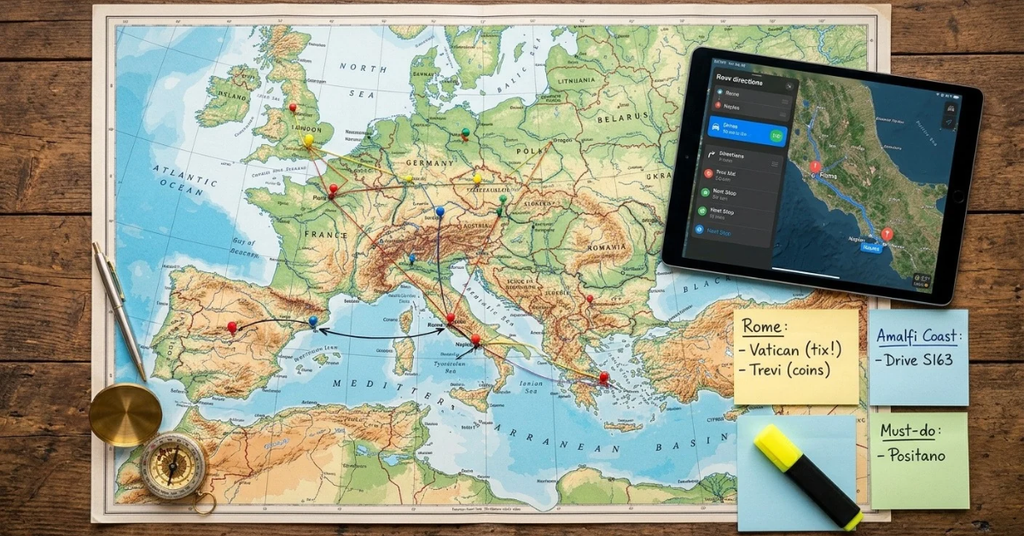
Once your priorities are clear, identify the places that genuinely deserve your time. Read official tourism information, museum websites, national park guidance, transport schedules, and recent traveler reviews. Look beyond famous landmarks to find neighborhood markets, local walking routes, small museums, viewpoints, and community-run experiences.
Create a shortlist of attractions, recording their locations, opening days, approximate visit durations, admission charges, and reservation requirements. Verify details directly before committing, particularly for popular attractions and seasonal activities.
Now study the geography. Mark your airport or arrival station, accommodation options, major attractions, and departure point on a map. Group nearby sights into manageable clusters rather than crossing a city repeatedly.
For example, a three-day city break might dedicate the first day to the historic center, the second to museums and nearby neighborhoods, and the third to a market visit followed by a relaxed afternoon. This arrangement reduces unnecessary travel and allows each area to reveal its character.
For longer journeys, consider a logical route with fewer backtracking miles. A road trip might follow a coastal highway, stop overnight in two smaller towns, and finish near the departure airport. However, scenic routes can take considerably longer than direct highways.
Check border crossings, ferry schedules, mountain-road restrictions, and driving times before finalizing international or remote-area itineraries. Add contingency time wherever weather, traffic, or limited transport services could cause delays.
Step 3: Create a Daily Travel Schedule
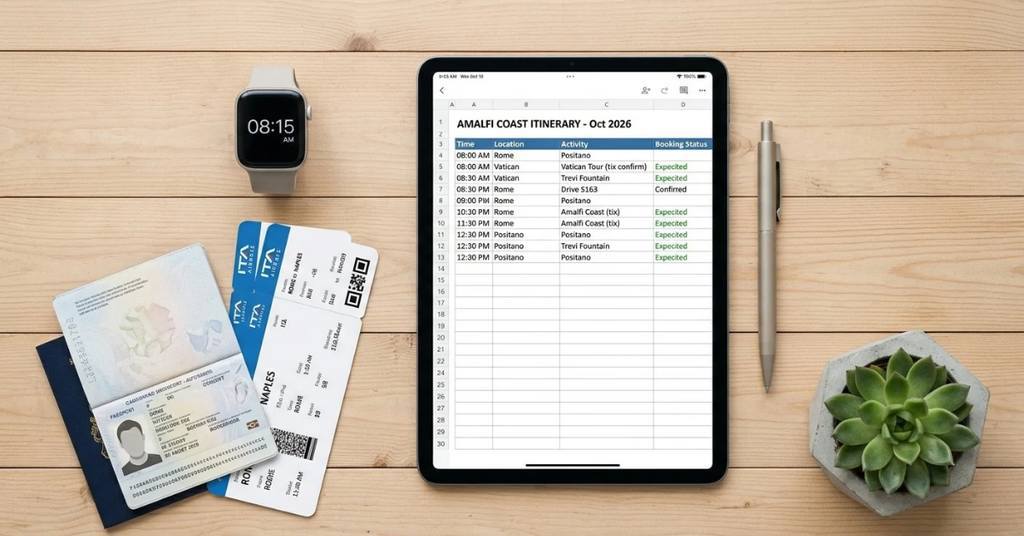
The most useful itinerary balances ambition with comfort. Begin by identifying fixed commitments: flights, train departures, accommodation check-in times, timed museum tickets, guided excursions, and restaurant reservations.
Arrange flexible activities around these commitments. A practical daily schedule usually includes one major attraction, one or two nearby activities, meal breaks, and some unscheduled time. Active travelers may manage more, while families with young children or travelers with mobility limitations may need a slower pace.
Estimate the complete time required for each activity. A two-hour museum visit might also require a forty-minute journey, a security queue, lunch, and time to reach the next destination. Ignoring these smaller periods makes even an attractive schedule unrealistic.
Example: A balanced one-day itinerary
- 8:00 a.m.: Breakfast near your accommodation.
- 9:00 a.m.: Visit a major historic attraction.
- 11:30 a.m.: Walk through the surrounding neighborhood.
- 12:30 p.m.: Enjoy a local lunch.
- 2:00 p.m.: Explore a museum, garden, or market.
- 4:00 p.m.: Rest, shop, or return to your hotel.
- 6:00 p.m.: Visit a scenic viewpoint.
- 7:30 p.m.: Have dinner and review tomorrow’s plans.
Adjust these times to local opening hours, daylight, transport availability, and your energy level. The schedule is a framework, not a promise that every activity must happen.
Include alternative activities for rainy days, extreme heat, unexpected closures, or fatigue. A nearby gallery, covered market, or relaxed café can save an otherwise disappointing afternoon.
Step 4: Set a Realistic Travel Budget
A good itinerary should match your finances before you start booking. Calculate the estimated cost of flights, accommodation, local transportation, meals, activities, insurance, visas, and other required expenses.
Divide your budget into categories. Then estimate daily spending and multiply it by the number of travel days. Add a contingency reserve of approximately 10–20 percent, adjusting upward for unpredictable routes, expensive destinations, or complicated international connections.
Illustrative seven-day budget for one traveler
| Expense | Estimated cost |
| Accommodation | 280–700 |
| Food and drinks | 140–280 |
| Local transportation | 50–140 |
| Attractions and activities | 70–210 |
| Miscellaneous expenses | 50–100 |
| Estimated total, excluding international flights | 590–1,430 |
These figures are planning examples in US dollars, not universal prices. Actual costs vary substantially by country, season, accommodation standards, exchange rates, and personal preferences.
For your chosen destination, research prices in the local currency and convert them into your home currency using a current exchange rate. Allow for bank charges, foreign transaction fees, cash withdrawals, and unfavorable conversion rates.
Carry a suitable mix of payment methods. International cards are widely accepted in many cities but may be unreliable at rural guesthouses, small markets, remote trailheads, and local transport counters. Keep emergency cash secure and separate from your main wallet.
Save money by traveling outside peak periods, booking refundable accommodation when uncertainty is high, using public transport, and choosing lunch specials or local eateries. Never sacrifice essential safety, suitable insurance, or reliable transport merely to meet an unrealistic budget.
Step 5c

Your accommodation influences travel time, comfort, and the overall cost of your itinerary. The cheapest room is not always the best value if reaching major attractions requires expensive taxis or lengthy journeys.
Budget accommodation: Hostels, guesthouses, and simple rooms suit travelers prioritizing affordability. Check reviews for cleanliness, security, noise, shared facilities, and public transport access.
Mid-range accommodation: Boutique hotels, serviced apartments, and established local hotels often provide a balance of comfort and convenience. Compare breakfast, cancellation terms, luggage storage, and check-in arrangements.
Luxury accommodation: Resorts, heritage properties, and high-end hotels can offer exceptional service, distinctive settings, and convenient amenities. Consider whether the experience justifies the premium within your overall budget.
Study the property’s precise location rather than relying solely on promotional descriptions. Confirm whether it is near the station or merely connected by an infrequent bus. Read recent reviews and inspect additional charges, including city taxes, parking, resort fees, or breakfast supplements.
For multi-city journeys, compare the cost of staying centrally with accommodation farther away. A slightly more expensive central room may save enough transport time and money to become the better option.
Book essential accommodation before building your entire schedule around it. Keep confirmations accessible offline and record check-in deadlines, addresses, and emergency contact details.
Step 6: Plan Transportation and Connections

Transportation determines how much of your destination you can realistically experience. Compare flights, trains, coaches, public buses, rental cars, ferries, and private transfers according to cost, reliability, comfort, and travel time.
For international flights, check baggage allowances, airport locations, transit requirements, and minimum connection times. A cheaper ticket with separate bookings may expose you to additional costs if the first service arrives late.
Rail and coach travel can provide scenic journeys and convenient city-center arrivals. However, frequency varies by region, and advance reservations may be necessary on busy routes. Confirm the departure station because large cities sometimes have several terminals.
Rental cars provide flexibility for countryside routes, remote attractions, and family travel. Before booking, investigate driving-license requirements, insurance exclusions, toll systems, parking costs, road conditions, and whether an International Driving Permit is required.
Avoid scheduling a major attraction immediately after a long overnight journey. Fatigue, delayed luggage, immigration queues, and unexpected transfers can undermine even careful planning.
Download offline maps before departure and save important addresses. Google Maps supports offline navigation in downloaded areas, although some features, including live traffic and certain transport directions, may be unavailable without connectivity. Carry a power bank and maintain a backup navigation option for remote journeys.
Step 7: Check Documents, Connectivity, and Local Customs
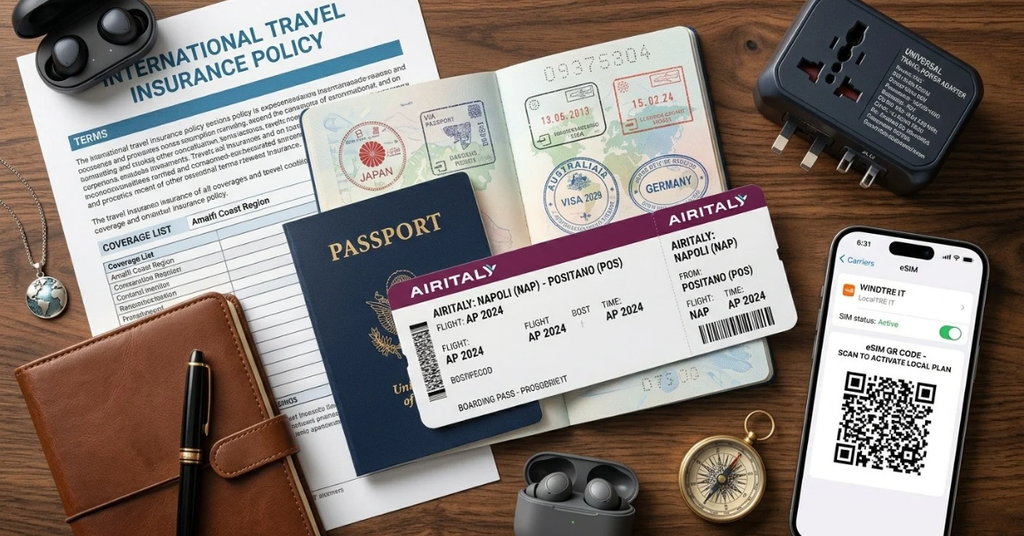
International travel requires more than a flight reservation. Check passport validity, visa requirements, transit permissions, vaccination or health documentation where applicable, and entry conditions for every country on your route.
Requirements depend on nationality, residence, destination, transit points, and travel purpose. Consult official immigration authorities and your airline before departure. The International Air Transport Association’s Travel Centre can help you research passport, visa, and health requirements, but final decisions rest with the relevant authorities.
Arrange suitable travel insurance and read its exclusions. Confirm coverage for medical emergencies, cancellations, baggage loss, rental vehicles, and adventure activities you intend to undertake.
Research local etiquette before arrival. Dress expectations, tipping practices, photography restrictions, religious customs, and rules for visiting sacred places differ between communities. Learn a few useful phrases in the local language, including greetings, please, thank you, and asking for directions.
Check mobile connectivity and roaming charges. Depending on the country and your phone, an international roaming plan, local SIM card, or eSIM may be appropriate. Confirm device compatibility and registration requirements before purchasing a plan.
Finally, check electrical socket types and voltage. Some destinations use different plugs or electrical standards from those in your home country. Bring a compatible adapter and verify whether your devices support the local voltage.
Essential Logistics: How to Get There and Around
Turn your research into a clear travel sequence. Record the arrival airport or station, transfer arrangements, accommodation address, and estimated journey time for each travel day.
For a mountain destination, allow extra time for winding roads and changing weather. Coastal islands may depend on ferry schedules, while large cities can experience severe rush-hour congestion. Check official operator updates rather than assuming a route runs throughout the day.
Keep essential bookings together in a digital folder and retain copies of important documents securely. Share your itinerary with a trusted contact when traveling alone, particularly if your plans involve remote hiking or long drives.
Step 8: Compare Your Travel Planning Options
Different planning methods suit different travelers. Choose the approach that makes essential information easy to update and access.
| Planning method | Best for | Main advantage | Limitation |
| Spreadsheet | Multi-day trips | Clear budgets and schedules | Requires manual updates |
| Digital calendar | Timed reservations | Convenient reminders | Less suitable for detailed notes |
| Mapping application | Road trips and city visits | Shows distances and locations | May miss local restrictions |
| Travel planning application | Complex itineraries | Organizes bookings centrally | Features may require payment |
| Notebook | Simple or offline trips | Easy to personalize | Information can be harder to share |
You do not need expensive software to create an effective itinerary. A spreadsheet combined with a calendar and offline map is sufficient for many journeys.
Choose one primary planning document and keep it consistent. Record dates, destinations, confirmation numbers, addresses, transportation details, estimated costs, and backup activities. Avoid scattering essential information across dozens of screenshots and messages.
Step 9: Review, Refine, and Prepare for Departure
Several days before departure, review the entire itinerary from beginning to end. Check booking confirmations, opening hours, transport changes, local weather, travel advisories, and any entry requirements that may have changed.
Look for unrealistic transitions. If a morning train arrives at 11:00 a.m., a museum across town that closes at noon probably deserves another day. If three major attractions require separate reservations, confirm that their times leave sufficient room for transfers.
Download tickets, maps, and reservation details where possible. Charge your devices, arrange airport transportation, and prepare medications, travel documents, and necessary adapters.
Leave room for surprises. A local festival may close a street, a favorite café may appear unexpectedly, or a mountain viewpoint may become inaccessible because of weather. A strong itinerary makes adaptation easier because you understand your alternatives.
Review your spending as the trip progresses. If one day becomes expensive, choose a free walking route or public park the next day rather than abandoning the budget entirely.
Insider Travel Tips, Costs, and Tourist Traps to Avoid
Avoid overplanning. Visiting six distant attractions in one day can turn a holiday into a race. Prioritize experiences and accept that some places may need to wait for another trip.
Check the full price. Low-cost transport tickets can exclude baggage, seat selection, transfers, or change flexibility. Compare the final amount before paying.
Use official booking channels when practical. Confirm attraction tickets and transport reservations through authorized providers. Be cautious of unofficial resellers, misleading discount offers, and strangers promising guaranteed entry.
Protect your documents and payments. Keep backups of passport details, emergency contacts, and insurance information. Use secure payment methods and avoid displaying large amounts of cash.
Verify local safety information. Read current official advisories and check weather warnings, transport disruptions, and trail closures. Emergency numbers and healthcare access vary by country, so record the relevant details in advance.
Respect local communities. Ask permission before photographing people, follow posted restrictions, and avoid entering private property for photographs. Responsible travel includes leaving natural places clean and respecting wildlife.
Build in recovery time. Long-haul flights, changing time zones, hot weather, and physically demanding excursions can affect energy. Schedule lighter activities after difficult travel days.
Keep a daily reserve. Unexpected transfers, extra meals, medical supplies, or a missed connection can increase spending. A contingency fund offers flexibility without forcing you to abandon important plans.
Final Thoughts on Creating a Travel Itinerary
Learning how to create a travel itinerary is less about controlling every minute and more about making thoughtful decisions before the journey begins. A clear plan helps you spend wisely, move confidently, and experience more without exhausting yourself.
Start with the places that genuinely excite you, check the practical details, and build a schedule around realistic travel times. Prepare for changing weather, unfamiliar customs, transport delays, and unexpected expenses, but leave enough space for an unplanned conversation or a quiet afternoon beside the water.
The best itinerary is not necessarily the longest or most detailed. It is the one that supports your priorities, respects your budget, and makes each day feel manageable.
Plan carefully, travel responsibly, and remain curious. With a little preparation and plenty of flexibility, your next journey can become a collection of meaningful experiences rather than a checklist of places hurriedly visited.
Frequently Asked Questions
1. How far in advance should I create a travel itinerary?
For a simple weekend break, one to four weeks may be enough. International trips, popular festivals, remote destinations, and peak-season holidays may require several months of preparation. Book limited-capacity experiences earlier when necessary.
2. What is the easiest way to make a travel itinerary?
Start with your dates, budget, and main priorities. Mark attractions on a map, group nearby activities, reserve essential transportation and accommodation, and place the schedule in a spreadsheet or calendar. Keep confirmations and backup plans together.
3. Should I plan every hour of my vacation?
No. Schedule fixed reservations and important activities, but leave time for meals, rest, delays, and unexpected discoveries. Flexible itineraries generally work better than schedules that allow no room for change.
4. How many activities should I include each day?
For many city trips, one or two major attractions plus a few nearby activities provide a comfortable starting point. The right number depends on travel distances, opening hours, mobility, weather, and personal energy.
5. How much money should I budget for a trip?
Calculate transport, accommodation, meals, activities, insurance, visa costs, and daily expenses using current destination-specific prices. Add a contingency reserve of around 10–20 percent, increasing it when your route involves uncertainty.
6. Can I create an itinerary without paid software?
Yes. A free spreadsheet, calendar, mapping application, and saved booking confirmations can organize most trips. Download important information for offline access before leaving reliable internet coverage.
7. What should an international travel itinerary include?
Include travel dates, accommodation addresses, transport connections, reservations, estimated expenses, passport and visa checks, emergency contacts, insurance information, and backup plans. Requirements vary, so verify official guidance for your nationality and destinations.
8. Should I book everything before traveling?
Book essential transport, accommodation, and limited-capacity experiences in advance when appropriate. Leave some flexible activities unbooked if weather, local conditions, or personal preferences may change your plans. Review cancellation policies before paying.
